Building a Basic Compost Area
It’s been a productive week here at TotnesGardening.co.uk! ♻
An incredibly enjoyable afternoon building a new, basic compost area entirely out of recycled materials.
Between managing the usual summer maintenance across the South Hams, I finally found some time for a project I’ve been meaning to tackle for a while.
I often talk to my clients about the importance of "basic garden design"—the underlying structure and practical elements that make a garden work with you, not against you. Good design isn't just about pretty borders and sweeping lawns; it’s about having the right functional spaces. And for a truly healthy, organic garden, a proper compost area is an absolute cornerstone.
When we keep our green waste—grass clippings, soft prunings, and leaves—in our own gardens rather than bagging it up and sending it away, we create a closed loop.
I spent an incredibly enjoyable afternoon building a new, basic compost area entirely out of recycled materials.
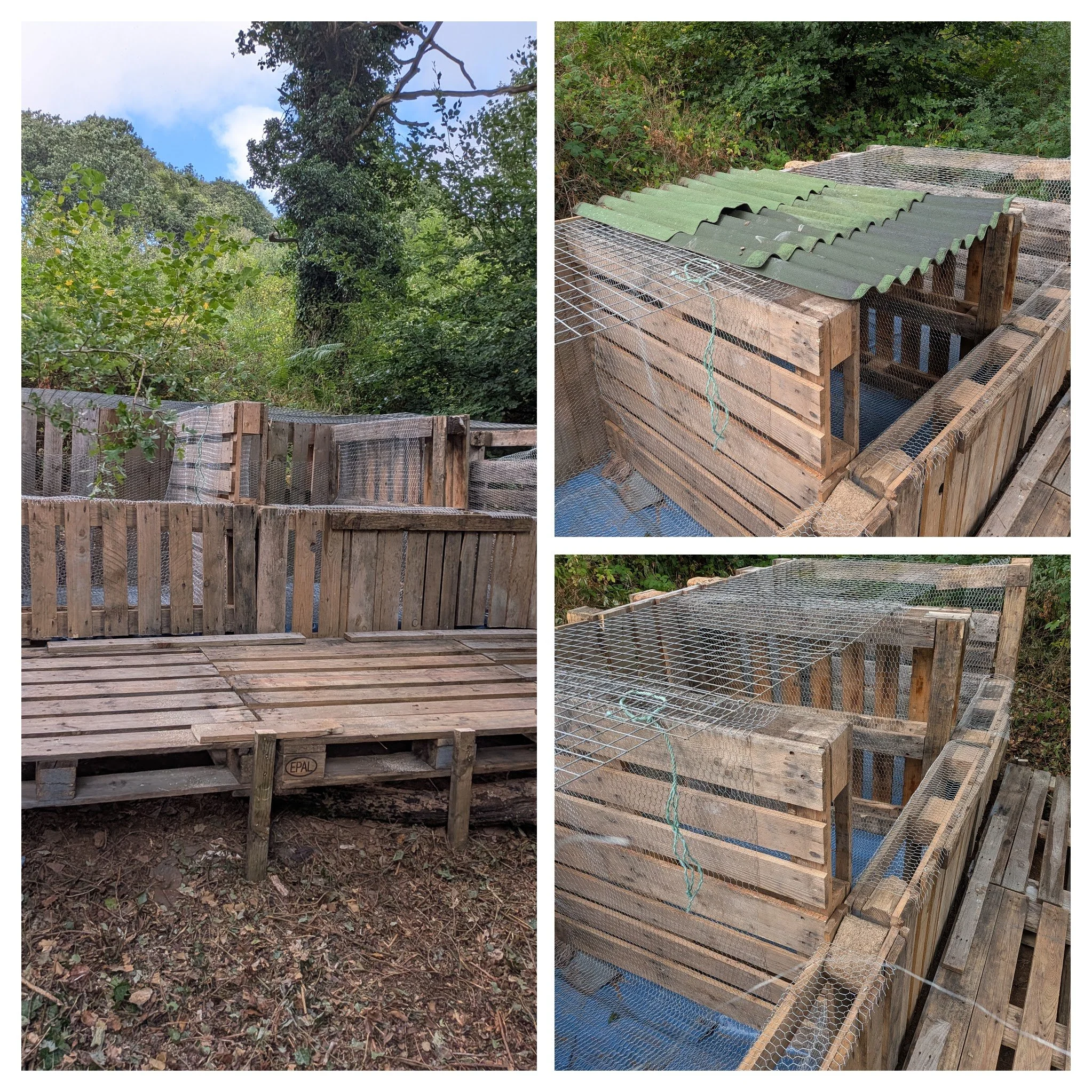
Basic compost area entirely out of recycled materials
The Build: Pallets and Chicken Wire
I wanted a system that was robust, functional, and eco-friendly. I managed to source several sturdy, old wooden pallets that were destined for the scrap heap.
Using the pallets as the main structural walls, I created a classic three-bay compost system. This design is fantastic because it allows you to rotate your waste:
Bay 1: For adding fresh green waste and kitchen scraps.
Bay 2: For the maturing compost that is actively breaking down.
Bay 3: For the fully "cooked," rich black gold ready to be spread onto the beds.
To finish it off and keep everything contained (while still allowing vital airflow), I lined the inside of the pallets with some chicken wire. It’s a beautifully simple, rustic piece of basic garden design that cost next to nothing but will pay dividends for years to come.
Why I Prefer On-Site Composting
If you’ve read my previous thoughts on Garden Waste Management, you’ll know that on-site composting is always my "Green Preference."
When we keep our green waste—grass clippings, soft prunings, and leaves—in our own gardens rather than bagging it up and sending it away, we create a closed loop. We are taking the nutrients that grew in the soil and putting them right back in. It’s the ultimate way to feed your local ecosystem naturally, reducing the need for bought-in fertilizers and helping to condition our heavy Devon clay.
Need Help Setting Up?
Building this compost area was a great reminder of how satisfying it is to create functional, sustainable structures in the garden.
If you are interested in incorporating a compost area into your own garden design, or if you need help managing your green waste, let me know. Whether we are building a bespoke pallet bin or you just need advice on getting the right mix of "greens and browns," I'm here to help you get your soil working for you.
Let’s get your garden ecosystem thriving.