A proper Devon heatwave
At Totnes Gardening, my priority right now has shifted from aesthetic pruning to life support. Here is a look at what I'm doing to keep my clients' gardens alive, and what you can do at home.
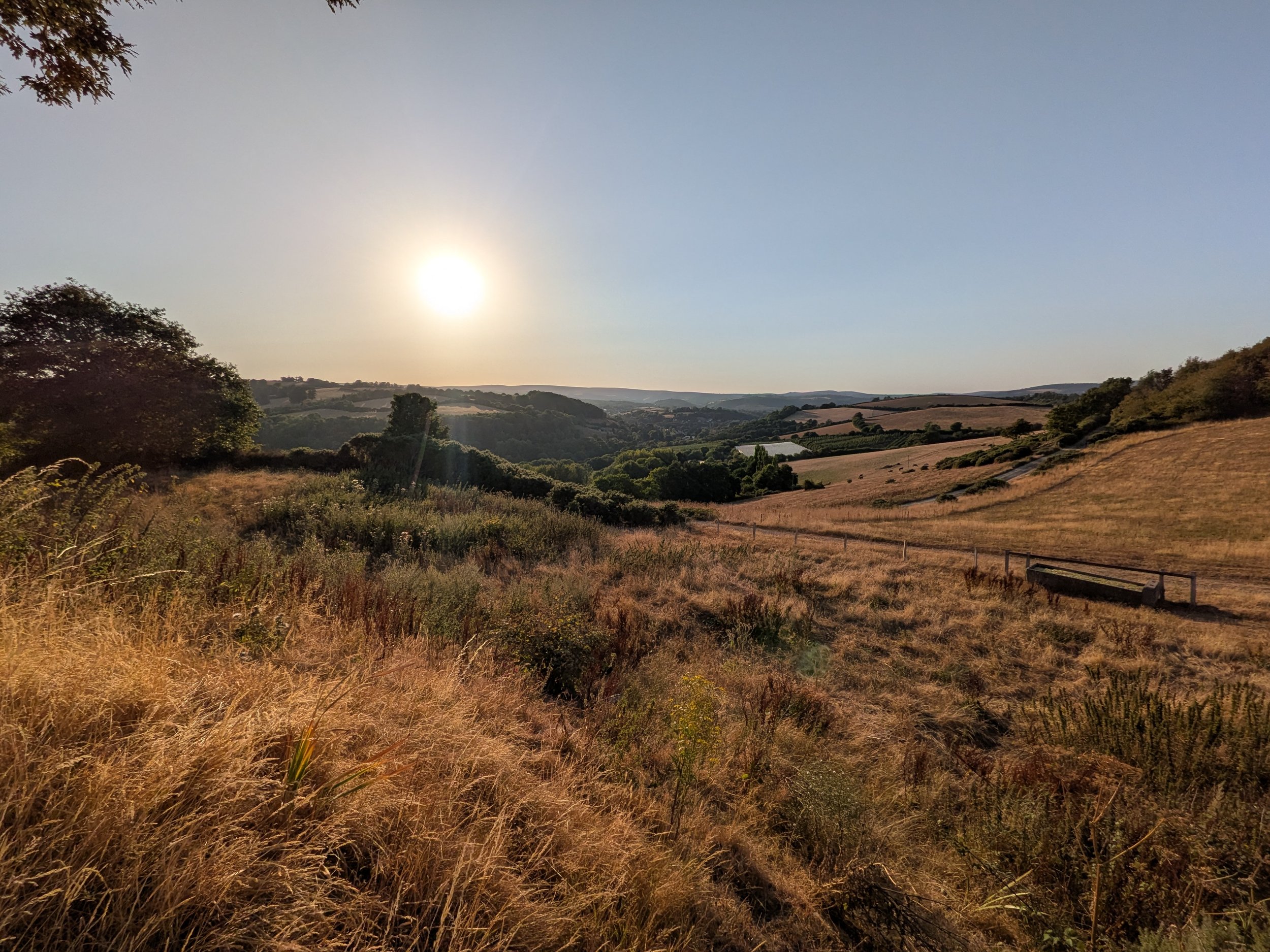
A proper Devon heatwave
Heatwave Gardening Rules
With lawns turning brown and a strict hosepipe ban in place, your garden requires careful management:
Water Efficiently: Use a watering can to target the base of your plants deeply but less frequently. Water early in the morning or late in the evening to prevent rapid evaporation.
Apply Mulch: Spread a thick layer of decorative bark or compost over your soil. This acts as a barrier to retain moisture and regulate root temperatures.
Down Tools: Stop applying fertilisers, as they force plant growth and induce extra stress. Avoid heavy pruning and raise your lawnmower blade to the highest setting if you must cut the grass.
Surviving the Summer Bake: Managing Your Garden in a Devon Heatwave
August Update: If you've looked out across the valley recently, you'll know exactly what I'm talking about. The lush greens of spring have given way to the scorched, straw-coloured hues of a proper Devon heatwave.
It has been an exceptionally dry and hot few weeks here in the South Hams. While we all enjoy a bit of sunshine, this kind of sustained, intense heat puts an enormous amount of stress on our gardens. Plants that normally thrive in our usually temperate climate are suddenly fighting for survival.
The Golden Rules of Heatwave Watering
When the ground is this baked, a quick splash with the hose does more harm than good.
Water Deeply, Less Often: Surface watering encourages roots to stay near the top of the soil, making them even more vulnerable to the heat. We need to soak the ground thoroughly so the water penetrates deeply, encouraging roots to grow downward where it's cooler and damper.
Timing is Everything: I am starting my days earlier than ever to get the watering done before the sun has a chance to evaporate it all. Always water first thing in the morning or late in the evening. Never water in the midday sun, as droplets on the leaves can act like magnifying glasses and scorch the plants.
The Power of Mulch (Decorative Bark)
If there is one single thing I recommend doing right now, it’s mulching.
As I mentioned in a recent update, I have been laying down a lot of decorative bark lately.
A thick layer of bark (or compost, if you have your own system running!) acts like a thermal blanket for the soil. It achieves two critical things during a heatwave:
Moisture Retention: It dramatically slows down evaporation, meaning the water you apply actually stays in the soil for the plants to use.
Temperature Regulation: It shades the soil, keeping the root systems significantly cooler than if they were exposed to the baking sun.
Down Tools: What NOT to Do
During a heatwave, the goal is minimal stress. This means stopping certain routine tasks:
Stop Fertilizing: Pushing a plant to grow when it is already stressed by heat and lack of water is a recipe for disaster. Wait until the weather breaks and the soil is moist again before feeding.
Raise the Mower Blade: If you absolutely must mow the lawn, raise the cutting height as high as it will go. Longer grass shades its own roots and helps the soil retain moisture. Ideally, just let the lawn go dormant—it will recover when the rain returns.
Hold off on Planting: Unless you are prepared to water religiously every single day, now is not the time to be putting new plants into the ground. Keep new purchases in their pots in a shaded area until conditions improve.
Let's Get Through the Heat
If your garden is struggling and you need help implementing these survival strategies, please get in touch. Whether you need an emergency watering schedule set up or a heavy application of moisture-retaining bark, I am here to help your plants weather the storm (or lack thereof!).
Stay cool, and keep those roots covered.
📧 Email:kevin@totnesgardening.co.uk 🌐 Website:www.totnesgardening.co.uk