Hydrangeas: Why Are Mine Blue? (And the 5-Minute Heatwave Secret)
Walk around any street in Totnes this July, and you'll see them: big, beautiful hydrangea bushes, absolutely covered in flowers. They are a fantastic, reliable choice for any Devon garden and one of my absolute favourite garden shrubs.
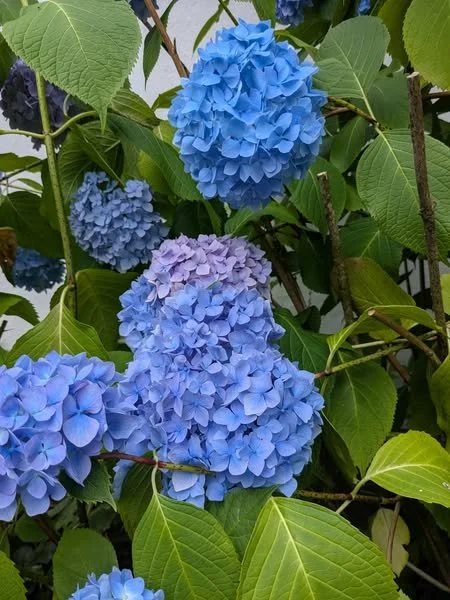
Acidic soil gives you vivid blue flowers.
#TotnesGardening
Blue or Pink? The Chemistry Behind Totnes Hydrangeas
One of the questions I get asked most often while working in gardens around Totnes is about hydrangea colour. A client might have a blue one, while their neighbour right next door has a pink one.
It’s not magic – it’s chemistry! The colour of a hydrangea flower is a direct reaction to the pH of the soil it’s growing in:
Acidic soil gives you vivid blue flowers.
Alkaline soil gives you rich pink or red flowers.
Borderline soil produces an amazing mix of blues, purples, and pinks on the exact same bush, acting as a living litmus test right there in the garden!
Totnes has a mild, temperate maritime climate (USDA Hardiness Zone 9) with diverse microclimates and varied soil types ranging from wet woodlands to acidic and calcareous grasslands. Understanding your local soil pH and conditions is the secret to unlocking their true potential.
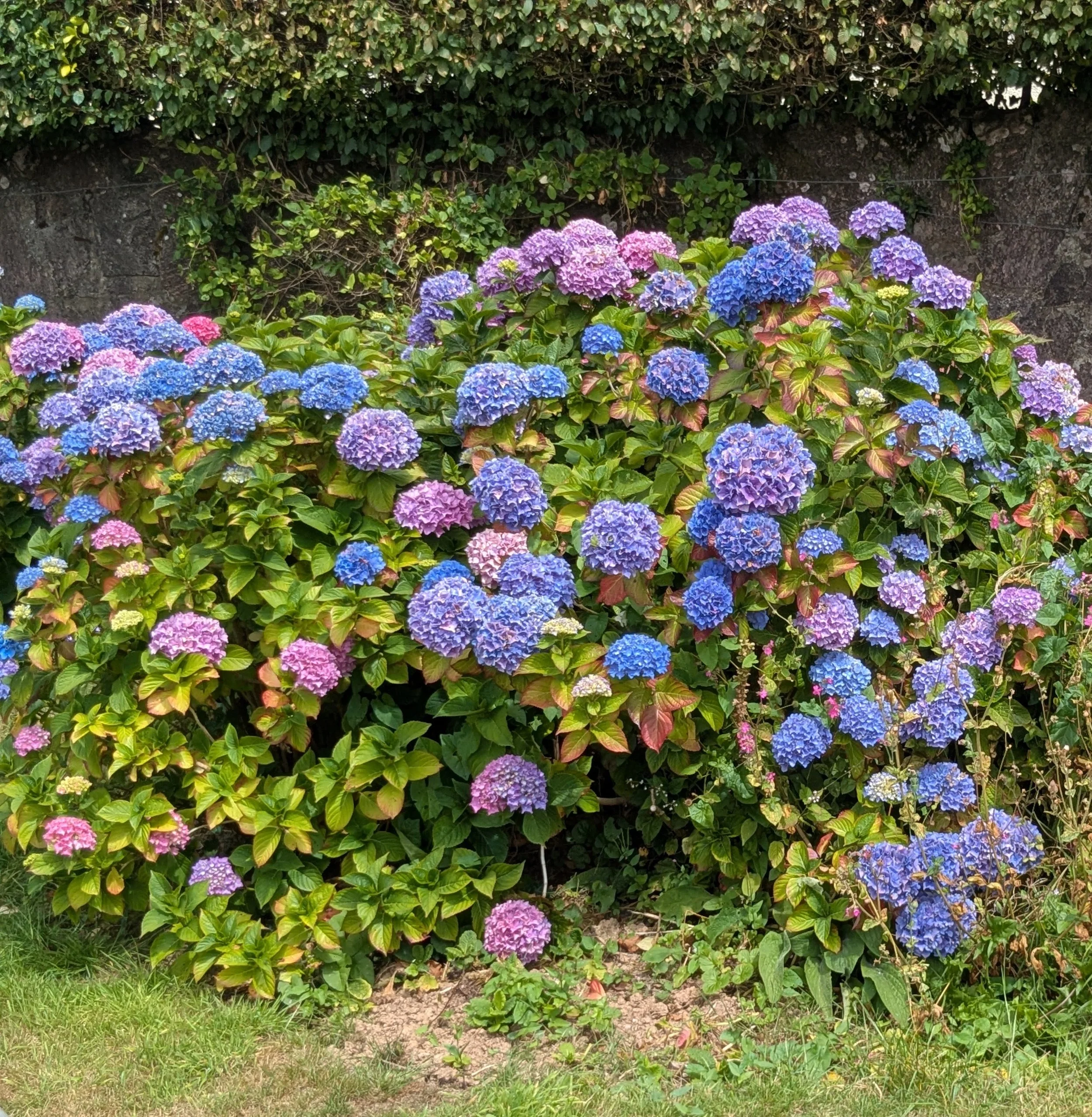
Borderline soil produces an amazing mix of blues, purples, and pinks on the exact same bush, acting as a living litmus test right there in the garden!
The 5-Minute Heatwave Hydration Routine
Hydrangeas are thirsty shrubs, especially during a dry July spell. However, standing over them in full sun with a hose and spraying the leaves actually scorches the petals, turning pristine flowers brown.
To keep your hydrangeas and summer borders standing tall through the heatwave:
Shatter the Surface Crust: Take a light hoe around the base of your plants for five minutes once a week to break the hard soil crust, allowing oxygen, water, and air to reach the roots.
Water the Roots, Not the Leaves: Apply a slow, deep drench straight to the soil base at dawn or dusk.
Mulch for Moisture: Cap the soil with a 2-to-3-inch layer of well-rotted manure or organic compost. This locks in moisture, regulates soil temperature, and feeds the ground naturally so your plants can fight off stress.
Time Your Pruning: Knowing when and how to prune hydrangeas makes the difference between a few sparse heads and a stunning, full display year after year.
As Seen In Devon Live and the National Press
Following the viral national press coverage of our original organic rose bed maintenance guide—picked up by Netmums, the Liverpool Echo, and the Reach PLC network—the spotlight is back on building resilient summer borders.
If you’ve checked the news this week, regional outlets like Devon Live and national papers like the Daily Express are buzzing with headlines warning about wilting hydrangeas and sharing simple four-step methods to keep them blooming through the heat. Mainstream feeds are currently urging gardeners to adopt a weekly five-minute check that can transform their summer display, while highlighting how the right companion plants can turn bare borders into a mass of bloom.
Expert Garden Maintenance in Totnes
From spring renewal to summer heatwave care and autumn border prep, every season in Devon brings its own rhythm. Whether you need help revitalising a border, pruning hydrangeas, or creating a low-maintenance, wildlife-friendly haven, I’m here to take the graft out of your gardening.
Need your beds sorted?
Contact me at: kevin@totnesgardening.co.uk or via the Contact page.