🪵 November 2026 Field Update: Winging It With Clay, Old Plant Pots & YouTube Inspiration!
🐝 Look what’s taking shape on the decking in Totnes today! 🍂
After twenty years of gardening around Totnes and Dartington, you’d think I’d start a garden build like this with a tape measure, a sketchpad, and a proper plan.
Truth is, I’m completely winging it!
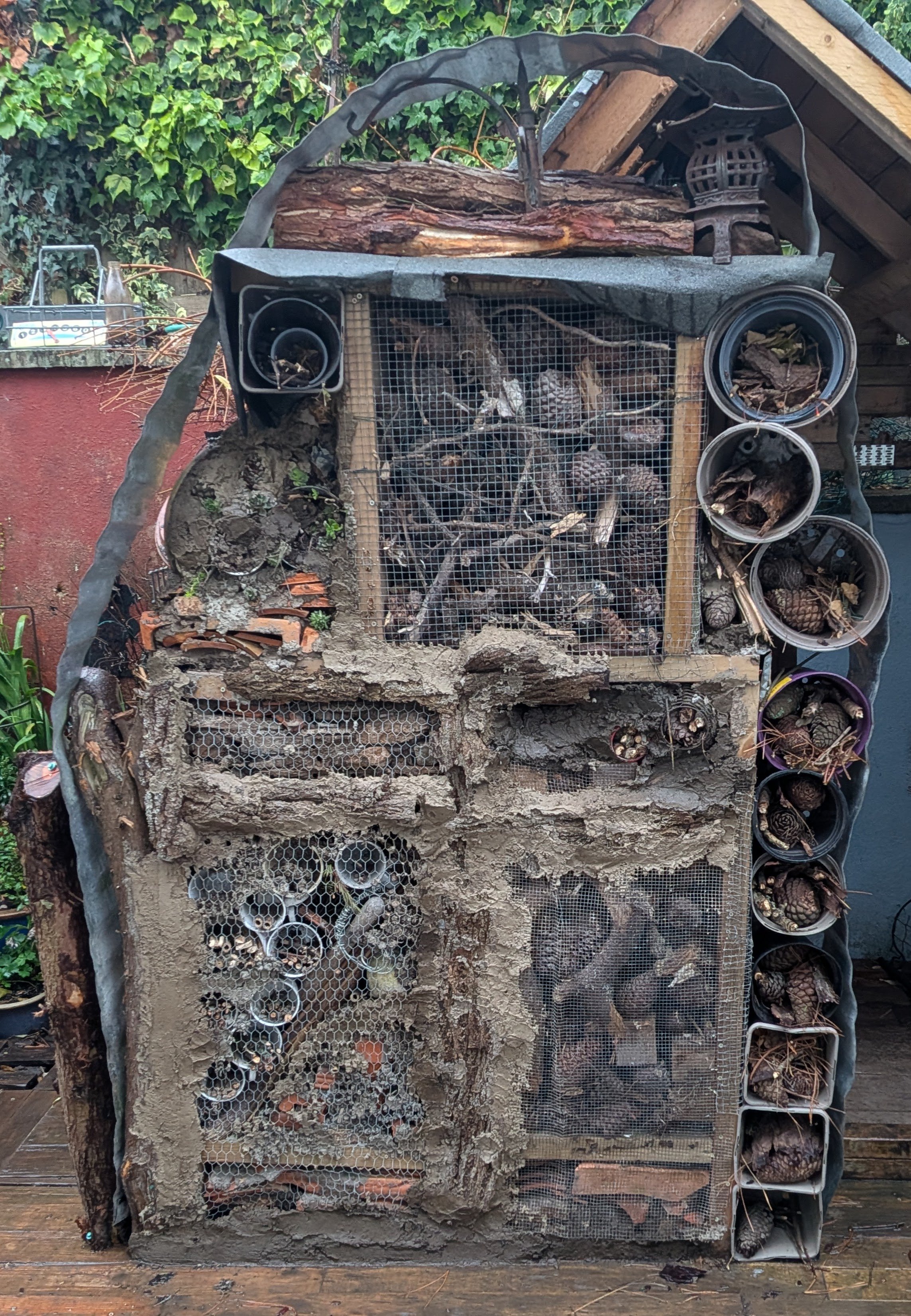
In between yesterday's Autumn Leaf Clearance (The First Quarter Drop) and tucking away leaf piles for our local hedgehogs, I fell down a YouTube rabbit hole watching a guy build these incredible, quirky street-level bug habitats. It got me thinking about how clinical and overly neat most shop-bought insect houses are. Just like my improvised Upcycled Wheelbarrow & Slate Hibernation Home in our Why We 'Leave the Leaves' for Totnes Hedgehogs blog, nature doesn't need straight lines or a spirit level—it just needs shelter, thermal mass, and dry nooks.
I looked at the pile of spare timber, old nursery pots, and broken terracotta at the back of my shed, and decided to kick off the Totnes Bug Hotel—or as I prefer to call it, an experimental bug hotel build and Freestyle Wildlife Stack.
Read our full Stage One breakdown below: Totnes Bug Hotel: Freestyle Wildlife Stack
Why Our "Active Rewilding" Approach Works for Insects Too
Building an experimental bug hotel from scratch isn't just about tidying out the shed—it connects directly to how we manage our Totnes and Dartington gardens through the winter:
The "Safety Mosaic" Vertical Edition: Just like we pair a Short Grass Cut for hedgehog hunting with stacked autumn leaves from our Leaf Clearance visits, a tall freestyle wildlife stack puts different micro-habitats under one roof. Beetles and woodlice get the cool, damp timber at the bottom, while spiders, lacewings, and ladybirds get bone-dry penthouses at the top.
Upcycled Shed Leftovers (Zero Waste to Landfill): Every gardener has stacks of old black round and grey square plastic plant pots gathering dust. By wedging a column of pots down the right-hand side and stuffing them with dry pine cones, bark, and dry leaves, we turn plastic waste into instant insulated winter chambers.
Freestyle Cob, Clay & Broken Terracotta: Inspired by that street build on YouTube, I’ve slapped a rough clay and mortar mix around the lower wooden bays and packed in broken terracotta tiles on the left shoulder. Cold-blooded insects love the heat-retaining mass of clay and terracotta, and once the mortar weathers, those nooks and crannies will be prime real estate.
Bird-Proofing With Wire Mesh: If you have Robins and blackbirds foraging across your newly raked and mown lawn, an open bug hotel quickly turns into an all-you-can-eat bird buffet! Meshing the front of the pine cone and twig bays with chicken wire and square mesh lets the bugs crawl in while keeping hungry beaks out.
The "Bug Hotel" Thermal Equation: Why Depth & Roofing Count
Winter Survival = (Roof Overhang + Thermal Mass) − Sideways Devon Rain
Why do so many shop-bought bee and bug hotels fail in South Devon? It comes down to the math of dampness vs. insulation:
The "Garden Centre Box" Trap: Most commercial bug hotels are only 5–8cm deep with thin pine roofs. In a wet Devon winter, sideways rain soaks right into the tubes, causing mould and chalkbrood fungus.
The "Freestyle Stack" Dividend: By capping the top of our build with heavy roofing felt, a thick split log, and an iron arch, we keep the upper chambers completely dry while the heavy cob/mortar walls buffer against sudden frosts.
The Hedgehog & Leaf Connection: Remember those shiny beetle wings we spot in hedgehog poo in our Why We 'Leave the Leaves' for Totnes Hedgehogs guide? Beetles breed and overwinter in decaying deadwood, stacked autumn leaves, and bark towers just like this one. By combining our Autumn Leaf Clearance & Stacking with a Freestyle Wildlife Stack, we aren't just helping insects—we are stocking the larder for local hedgehogs next spring!
My 3-Stage "Freestyle Wildlife Stack" Plan
Because this is completely off the cuff, I’m blogging the whole experiment right here on this page as it evolves over the next few months:
Stage One (Now — The Structure & Cob Base): Stacking the core frame, slapping on the clay/mortar rendering, packing the upcycled nursery pots with pine cones, and meshing the front.
Stage Two (Late Winter — The Solitary Bee Upgrade): Checking how the mortar settles and adding deep (15cm+) drilled hardwood blocks and hollow tubes before Red Mason bees wake up in March.
Stage Three (Spring/Summer — The Webcam & Check-In): Watching which rooms get booked first—from mud-capped bee tubes to spiders patrolling the terracotta crevices.
Next time you look at a pile of cracked terracotta pots, old pine cones, or spare timber behind your shed, don't chuck them in the skip—start stacking!
Book a Wildlife-Friendly Garden Tidy-Up in Totnes or Dartington
Want a garden that supports local wildlife without turning into an unmanaged jungle? Whether you need an Autumn Leaf Clearance, a crisp Short Grass Cut, or want to build your own Compost Area, Hedgehog Corner, or Freestyle Wildlife Stack, we specialize in Quiet Gardening using 100% low-noise battery tools.
Read our connected autumn guides: Autumn Leaf Clearance: The First Quarter Drop | Why We 'Leave the Leaves' for Totnes Hedgehogs
Explore our services & rates: All Gardening Services | Prices | Client Reviews
Get in touch with Kevin Hare: Contact Totnes Gardening or call 07935 721172.