If you have lived and worked in Totnes all your life like I have, you eventually reach a point where you find yourself taking photographs of rocks and putting them on the internet.
Looking out across the Dart valley toward the church spire over the river and the west winds rolling in, there is a famous local lyric that sums up this town in one line: "Seems everything around here stays like stone."
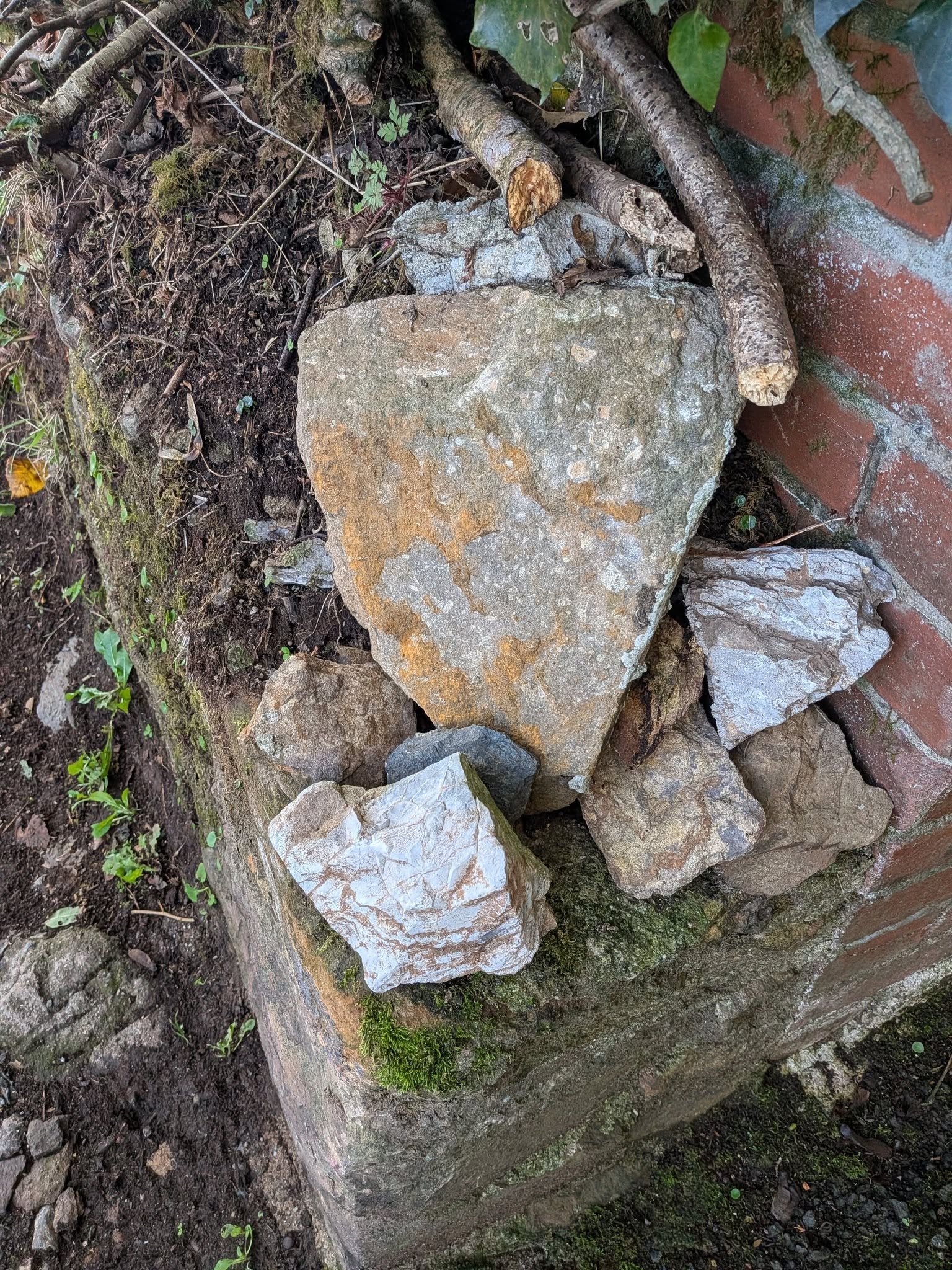
When you’re from here, you get the joke straight away. On one hand, it captures how stubbornly timeless this place is—how the hills, the river, and the old Devonian slate and limestone walls refuse to budge no matter what else happens in our lives. On the other hand, as a gardener who has spent a lifetime working behind those exact walls, I’ve ended up taking that line at face value.
The Living History Inside the Walls
There’s something special about town gardens. Tucked behind stone walls, squeezed between terraces, or perched above the bustle of Totnes’ winding streets, they’re little pockets of green that hold stories of the people who live there.
To a passerby on the High Street or the Narrows, Totnes really does stay like stone. Yet any gardener who works closely with these ancient boundary walls knows they aren't barren at all—they are living archives of the town's past.
Over decades and centuries, the lime mortar weathers and the crevices between the stones become miniature time capsules. They trap windblown seeds, dormant spores, and fragments of forgotten cottage gardens from generations ago. When you look closely at an old Totnes wall, you find remnants of the plants that former residents grew and loved: hart’s-tongue ferns and maidenhair spleenwort tucked into the damp shade, wild wallflowers, ivy-leaved toadflax, pennywort, and old varieties of valerian and campanula still clinging on from Victorian or medieval plots. Even the stone itself holds history, warming up in the afternoon Devon sun to shelter heirloom figs, climbing roses, and ancient fruit trees trained against the rock long before we arrived.
Finding Peace in the Stone
After years of caring for plots across this town, I’ve learned that you don’t fight the stone; you listen to what it’s already holding, and you let it anchor the whole garden.
In Japanese and Eastern garden design, stone isn't an obstacle—it’s the bones of the landscape. It represents permanence, age, and quiet. When you pair that grounded, minimalist stillness with the wild, historic plant remnants of the South Hams, those cramped town plots become sanctuaries. That is why I find myself photographing individual stones on my rounds: they hold the memory of the gardens that came before, and they act as the quiet centrepieces that make the green around them come alive today.
Design in Totnes: Serene. Sustainable. Quiet.
Transform your outdoor space into a place of profound peace. Whether you have a compact High Street courtyard or a larger hillside plot, we blend the minimalist beauty of the East with the wild charm of the South Hams.
If you want to see what goes into caring for gardens across Totnes and the South Hams day-to-day—including the occasional photograph of a very good rock—you can now follow all of my latest projects, seasonal tips, and local garden transformations over on Instagram and Facebook: