Taking Out a Box Hedge After Box Moth Devastation ✂️🌳
Across Totnes and the South Hams, we’re seeing a wave of Box Tree Moth caterpillar devastation.
A hedge that once framed a beautiful town courtyard can be reduced to bare twigs, webbing, and frass almost overnight.
Once those caterpillars strip the foliage down to the bark, the stems dry out and recovery isn't realistic. Rather than leaving a brown, dying structure taking up precious space in a small town garden, the best move is to take it out cleanly and make room for something fresh and moth-proof.
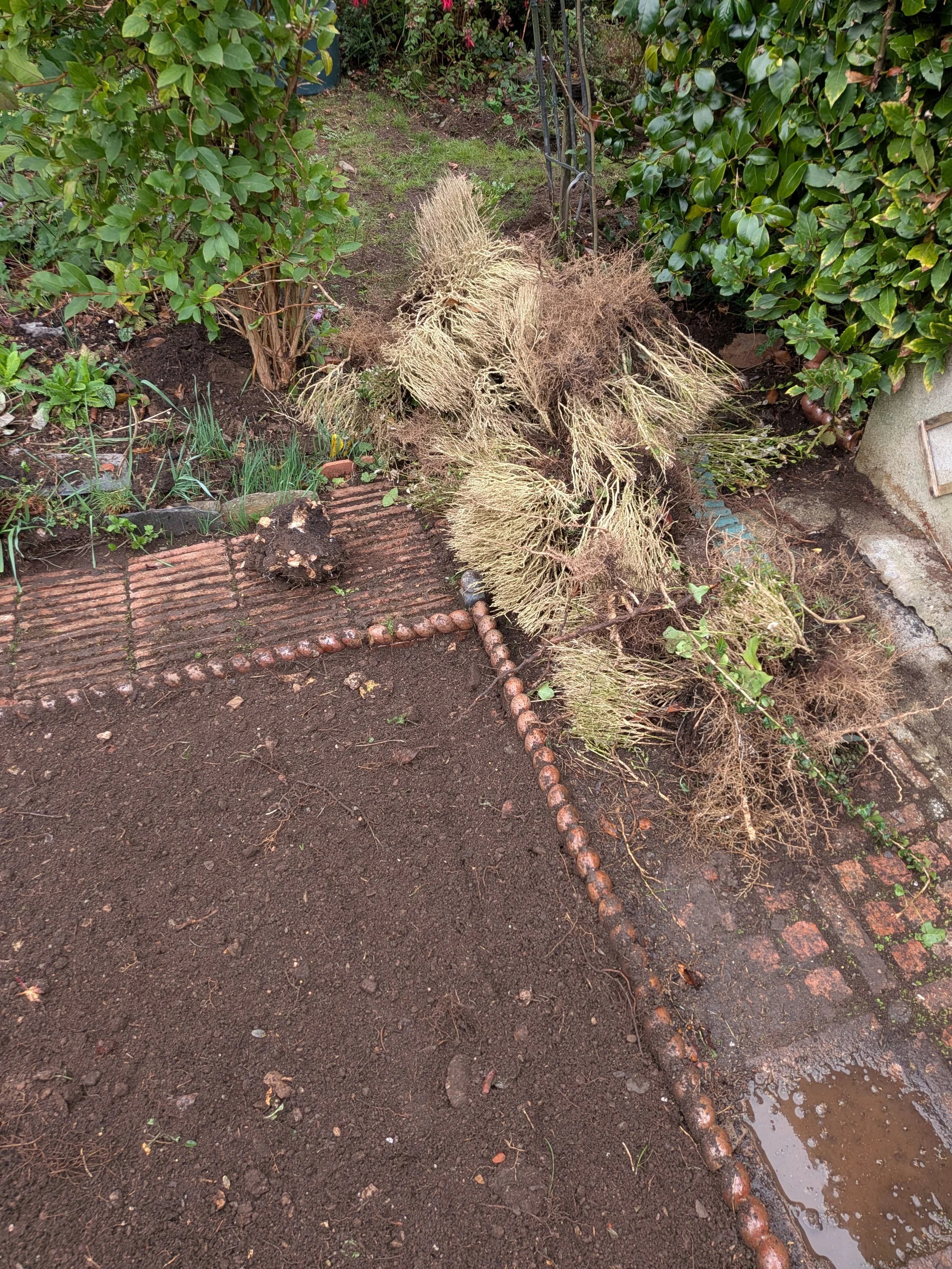
The Box Tree Moth caterpillar has been busy across Totnes and the South Hams recently 🐛✂️
Step-by-Step: Removing a Damaged Box Hedge
If your box hedge has suffered a similar fate and you're ready to clear it out, here is how to do it efficiently without spreading remaining pests:
1. Cut Back the Top Growth
Using bypass loppers or a hand saw, cut the hedge stems down to about 12–18 inches (30–45 cm) above ground level.
Why keep stubble? Leaving these main stumps gives you essential leverage when leverage-prying the root ball out later.
2. Bag and Seal the Infested Branches
Pack all the cut foliage and stems directly into heavy-duty rubble bags or green waste bags right at the spot.
Avoid dragging loose branches across the garden, as live larvae or pupae can drop off onto neighboring shrubs.
3. Dig Around the Root System
Box plants generally have relatively shallow, fibrous root systems, but older hedges can be tightly anchored.
Trench around each stump about 6–8 inches out using a sharp spade to sever lateral roots.
4. Lever Out the Stumps
Insert a heavy digging fork or mattock under the root ball using the main stem stubble as a lever.
Work your way around until the root pop loose.
5. Clear Old Soil & Prep for Replacement
Shake off excess soil back into the trench.
make sure to pick out remaining pupae or caterpillars hidden in the leaf litter.
What to Plant Next in a Totnes Town Garden?
Clearing out a dead box hedge opens up a great opportunity to introduce tough, low-maintenance, and moth-proof alternatives that thrive in town courtyards:
Euonymus japonicus 'Jean Hugues' (Looks virtually identical to Box, completely moth-proof)
Lavender & Rosemary (Drought-tolerant, highly scented, and perfect for sunny terraces)
Hardy Geraniums (Reliable, season-long ground cover for smaller plots)
If you read my previous post on Town Gardening—clearing out that hidden terrace tucked away behind Totnes’ stone walls—you’ll know how much I love working in these compact town spaces. But squeezed courtyards and terrace gardens come with their own challenges, especially when pests take over.
Dealing with box tree moth damage in Totnes?
Watch our step-by-step video guide on taking out a dead box hedge and what moth-proof plants to use next.
The box tree moth has hit South Devon hedges hard.
Learn how to remove infested boxwood cleanly in tight town gardens and explore top replacement options.
"It’s a sight far too many gardeners across Totnes and the South Hams are seeing this season: a once-plump box hedge reduced to bare twigs, webbing, and frass almost overnight.
Once the Box Tree Moth caterpillars strip the bark, the hedge isn't coming back.
In today’s blog post (and video), we’re taking out a fully devastated box hedge in a local town garden to clear the space for something fresh and pest-resistant."
Got a terrace, courtyard, or town garden in Totnes that needs a clearance or a fresh start?
📩 Get in touch: kevin@totnesgardening.co.uk
✅ Fully Insured Public Liability & Registered Waste Carrier