A Hummingbird Hawk Moth Summer 🦋
The UK is currently experiencing an exceptional "hummingbird hawk-moth summer" in 2026, with wildlife organisations reporting an unusually massive influx of these spectacular day-flying insects across British gardens and coastal areas.
"Have you seen a tiny, darting 'bird' hovering around your flowers this August? You aren't alone. You're actually witnessing a historic wildlife migration right in your own back garden."
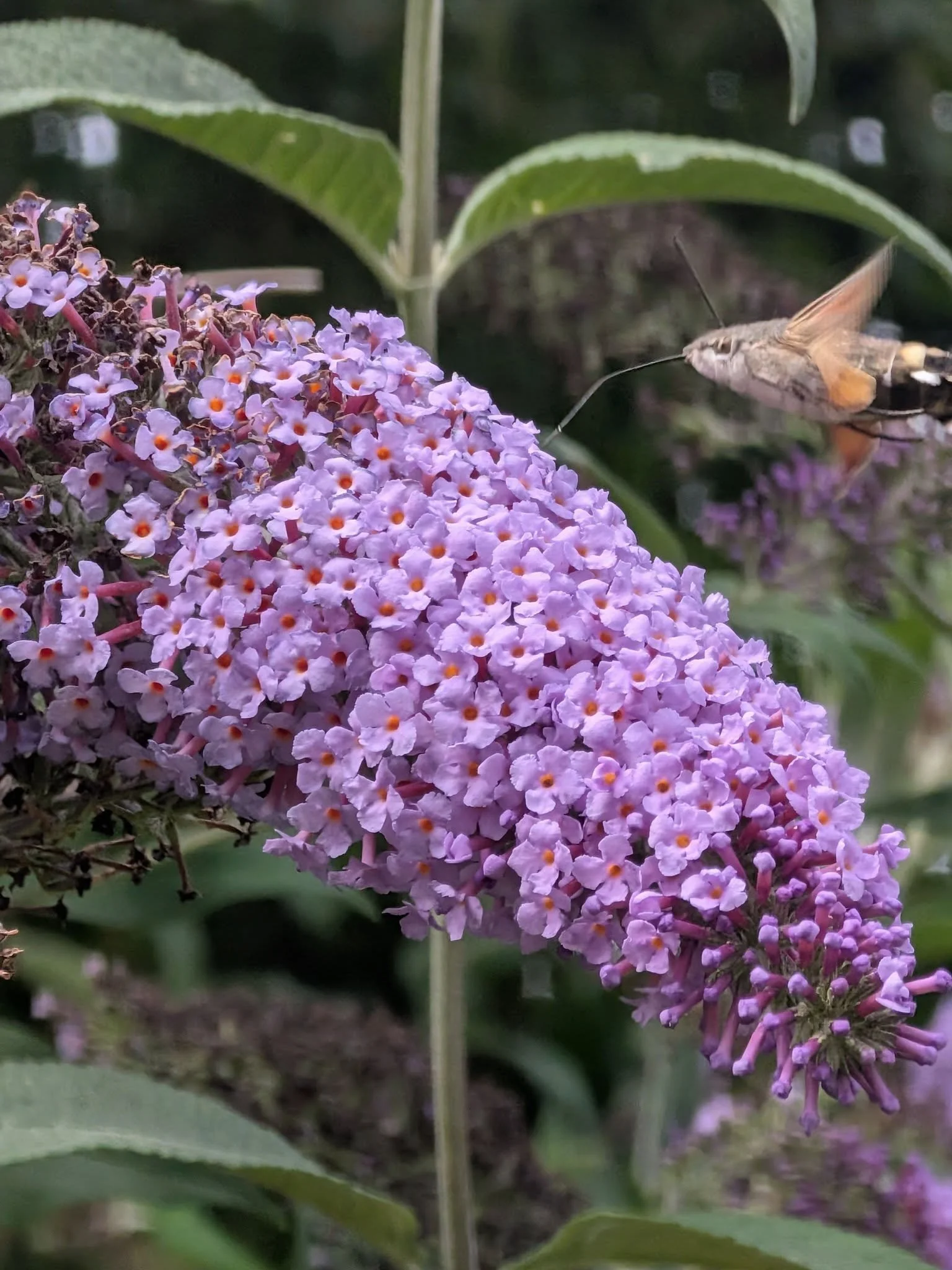
Hummingbird Hawk-moth (Macroglossum stellatarum) right here in my own garden in Totnes, feeding on a purple Buddleia.
What is a hummingbird hawk moth?
Just a few years ago in 2021, there were only 8 recorded sightings of the Hummingbird Hawk-moth in the UK.
This summer, we've hit a record-breaking peak of over 9,000. But spotting them can be tough.
How rare are hummingbird hawk moths in the UK?
They are quite elusive, spooky little creatures with an almost fairy-like presence that makes them incredibly hard to track.
Why Are There So Many This Year?
Southerly Winds: Strong winds across Europe have physically pushed the moths further north.
European Heatwaves: High temperatures in the Mediterranean caused an explosive migratory influx.
Weather Shifts: Climate change is causing unpredictable summer weather that alters insect migration trends.
When they finally do come close, the speed is staggering.
Their wings beat an astonishing 80 times every single second.
That’s why I had to film this visitor in slow-motion—it’s the only way to truly appreciate their bright orange hindwings and see exactly how they use that long proboscis to drink nectar on the wing.
Spotting the Hummingbird Hawk-Moth
If you've been hearing a low hum around your flower beds or seen what looks like a tiny, erratic bird hovering over your borders, you aren't alone!
"In the summer of 2021, there were just 8 of these recorded in the UK. This year? Over 9,000."
"The secret to seeing them? Total stillness. If you find a nectar-rich plant like this Buddleia and just freeze, they will treat you like part of the garden and come right up to you."
"They beat their wings an unbelievable 80 times a second to hover like this, which is exactly why I had to film this one in Totnes in ultra slow-motion."
Summer Update 🦋
While out working in the garden today, I was treated to one of my absolute favourite summer sights.
How can I attract them to my garden?🦋
The hummingbird hawk-moth (Macroglossum stellatarum) is easily mistaken for a genuine hummingbird due to its unique feeding behaviour and morphology
Whenever the summer heat sets in across the South Hams, people start talking about a very unusual visitor to our local gardens. And it's not just here in Devon—organizations like The Wildlife Trusts are officially declaring it a "Hummingbird Hawk-moth summer" across the UK!
Today, I managed to capture some footage of this incredible Hummingbird Hawk-moth (Macroglossum stellatarum) right here in my own garden in Totnes, feeding on a purple Buddleia. With its rapid wingbeats, audible humming sound, and darting flight pattern as it hovers to feed, it is incredibly easy to mistake for an actual hummingbird.
These fascinating moths are summer migrants, flying over from Southern Europe and North Africa in varying numbers each year to enjoy our warmer months. As you can see in the video, they have a brilliant, long proboscis that acts like a straw, allowing them to drink nectar on the wing without ever needing to land. I managed to get such great footage today that I'm actually planning to put together a full YouTube video on our channel showcasing these amazing visitors and the best plants to attract them—so keep an eye out for that soon!
🦋 Why This Matters for Your Garden
At Totnes Gardening, my core philosophy is that we aren't just maintaining a plot of land; we are "managing the ecosystem." Seeing visitors like the Hummingbird Hawk-moth is the ultimate reward for good ecological gardening.
These moths—along with our local bees, butterflies, and hoverflies—are drawn to gardens that offer a rich, continuous supply of nectar.
They absolutely love tubular flowers, which is why this one made a beeline straight for the Buddleia (often rightly called the butterfly bush!), but they also love Ceratostigma, Salvia, Valerian, Verbena, and Honeysuckle.
When we design planting schemes or manage rewilding zones, this is exactly the kind of life we are trying to attract.
A garden shouldn't just look tidy; it should be buzzing, fluttering, and completely alive.
"As an eco-gardener here in Totnes, I've learned a trick to getting close.
The secret is total stillness and the right plants.
These moths need high-octane fuel for their intense lifestyles, so they absolutely love tubular flowers.
If you stand completely still next to a Buddleia—the butterfly bush—they will eventually ignore you, treating you as just another part of the garden."
Plants for a Hummingbird Hawk-Moth Garden 🦋
If you want to attract these magical, hovering visitors to your borders, here are the top plants you need to incorporate.
We are theming a brand-new Totnes garden redesign entirely around these spectacular day-flying visitors.
Buddleia (Butterfly Bush) 🦋 If you’ve seen the videos we’ve been posting, you know this shrub is an essential centerpiece. These moths absolutely love tubular flowers, which is why they make a beeline straight for the Buddleia. These high-nectar shrubs (especially purple varieties) are the ultimate lure for a hovering moth.
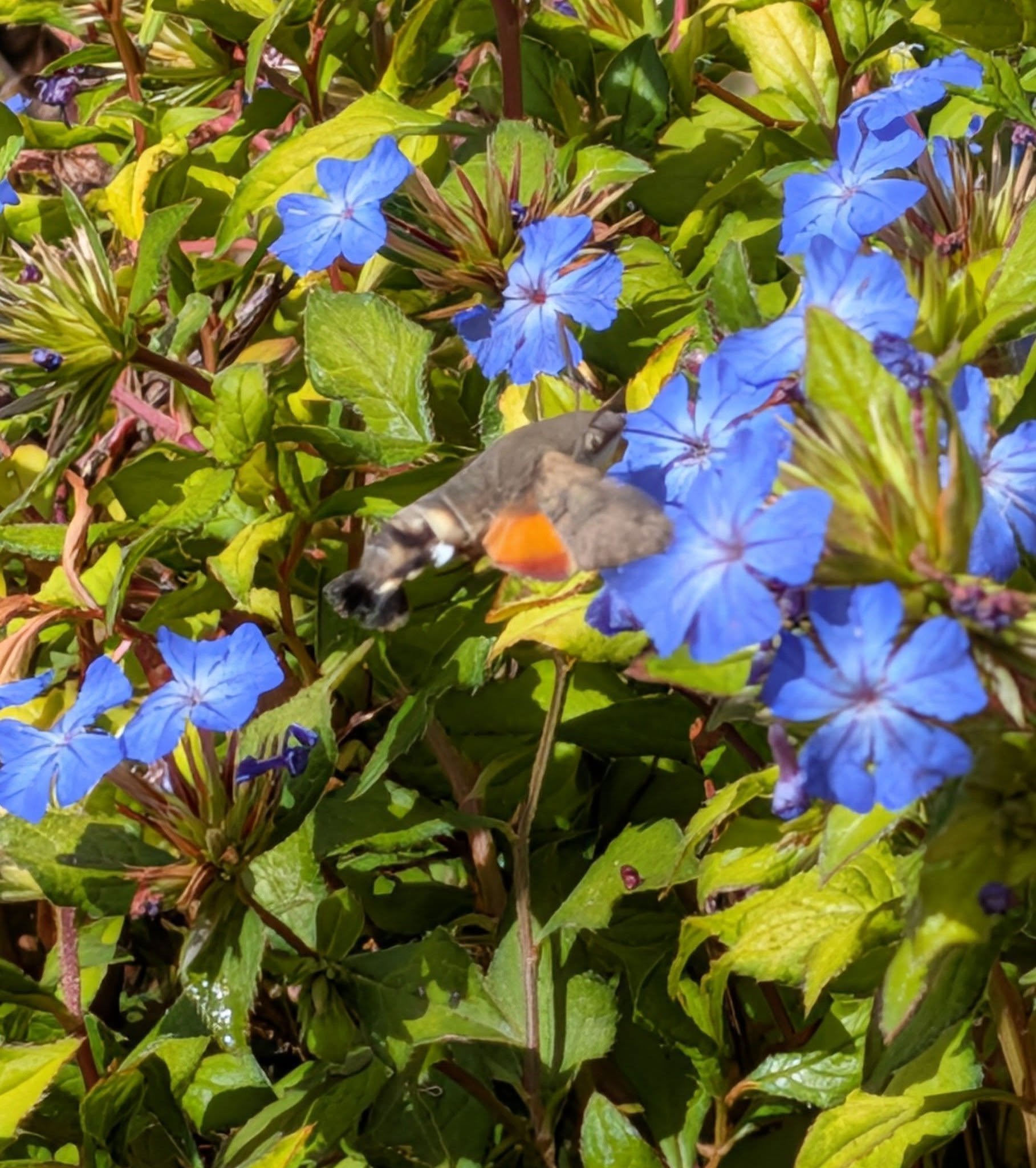
Ceratostigma (Hardy Plumbago)🪻This takes the second spot. The moths "especially love the blue shrub with an unpronounceable name!" Fellow gardeners correctly identified this quirky favorite as Ceratostigma (Hardy Plumbago). When this low-growing perennial bursts into its electric-blue flowers, the hummingbird hawk-moths dive straight in. The deep, tubular flowers are perfectly engineered for the moth's long proboscis, making it an absolute magnet for them.
Salvia (Hot Lips)🌹 A brilliant addition to any eco-garden! This striking, two-toned Salvia is a phenomenal nectar producer that blooms continuously from mid-summer right through to the first frosts. The open, tubular shape of the striking red and white flowers makes it incredibly easy for the hummingbird hawk-moth to hover and feed, and it adds a fantastic splash of vibrant color to the borders.
Wallflowers (Erysimum)🌷
A classic cottage garden favorite that these moths simply cannot resist! Wallflowers—especially long-flowering perennial varieties like 'Bowles's Mauve'—are an absolute powerhouse for wildlife. Because they start blooming early in the year and carry on right through summer, they provide a vital, continuous food source. Their sweet-scented, tubular petals hold hidden pools of rich nectar, perfectly positioned for a moth to tap into while hovering.
Let's Bring Your Garden to Life
The Modern Shift: When Historic Charm Meets Eco-Gardening 🦋
If you’ve been following our recent posts about the spectacular Hummingbird Hawk-moth summer we are having here in Totnes, you might have noticed something interesting. When we talk about the best plants to attract these incredible visitors—like Buddleia, Honeysuckle, and Valerian—we are often talking about plants that you'll find spilling over the walls of old, historic cottage gardens.
This got me thinking: Did gardeners in the "old days" design their borders specifically to feed these moths?
The short answer is no. It is actually a beautiful, happy accident.
The "Happy Accident" of the Past 🪻
Historically, the classic English cottage garden was incredibly practical. Gardeners packed their plots with robust perennials, fragrant herbs, and medicinal plants. Many of these staples naturally featured the deep, tubular structures that require a long proboscis to access.
Furthermore, many of these plants—like Lavender and certain Salvias—are Mediterranean imports that were brought to the UK centuries ago for their beauty and scent. Because the Hummingbird Hawk-moth is also native to Southern Europe, historic gardeners accidentally rolled out a familiar Mediterranean buffet for these migrating insects.
Even the famous Buddleia (the ultimate moth magnet!) was introduced by Victorian plant hunters purely for its spectacular, sweet-smelling blooms. A garden buzzing with life was simply a side effect of their planting style.
The Modern Shift 🦋
Today, at Totnes Gardening, our mindset has completely shifted. We don't just want a garden that looks pretty; we want to actively manage the ecosystem.
When modern eco-gardeners deliberately choose plants like Ceratostigma (Hardy Plumbago) and the vibrant Salvia 'Hot Lips', we aren't doing it by accident. We are selecting them specifically because those deep, tubular flowers are high-octane fuel for pollinators like the Hummingbird Hawk-moth.
We are witnessing a perfect, full-circle overlap. The romantic, abundant aesthetic choices of past gardeners happen to perfectly match the urgent ecological goals of today. By designing our borders to support wildlife, we are essentially recreating the beloved, overflowing look of the classic cottage garden—just with a lot more intention.
If your Totnes garden is lacking that summer buzz, it might be time to bridge the gap between historic charm and modern ecology. Let's get some nectar-rich perennials in the ground and bring your borders to life!
Local green spaces are seeing an extraordinary ecological shift. The local community using the #totnesgardening tag is reporting a massive influx of hummingbird hawk-moths (Macroglossum stellatarum) across TotnesGardening.Co.UK and British coastal areas.
The unusual volume of these remarkable day-flying insects has prompted wildlife organizations to declare it an exceptional "hummingbird hawk-moth summer". Local gardeners are noticing multiple moths feeding simultaneously, a stark contrast to typical single-sightings.
🦋 What's Behind the Influx?
Migratory Waves: These moths are strong fliers that migrate north from Southern Europe and North Africa. Favorable weather patterns have driven an unusually high concentration right into South Devon.
Aggressive Predators: The massive surge in moths has also altered local food chain behaviors. Gardeners have documented rare interactions, such as native European Hornets attempting mid-air ambush strikes on these incredibly fast moths as they feed.
🌸 Top 3 Plants Attracting the Sightings
If you want to draw these hovering visitors into your own garden, local eco-gardeners highlight three absolute magnets:
Buddleia (Butterfly Bush): Especially the purple varieties; high-nectar, tubular flowers that act as the ultimate lure.
Ceratostigma (Hardy Plumbago): An electric-blue flowering shrub perfectly engineered for the moth's long proboscis.
Salvia ("Hot Lips"): A continuous producer of red-and-white tubular blooms that makes hovering and feeding effortless.
Are you hoping to spot one in your own yard, or are you trying to design a specific wildlife border to welcome them?
"At Totnes Gardening, we believe in creating buzzing, living ecosystems. If your garden is missing this kind of summer magic, it might be time for a rethink. Head over to totnesgardening.co.uk to read my full guide on creating a pollinator haven, and don't forget to let me know in the comments if you’ve spotted one of these moths yet!"
If your Totnes garden is currently lacking that summer buzz, it might be time to rethink your borders.
Whether you want to integrate a small-scale wildflower meadow, add some high-nectar perennials and shrubs (like Buddleia) to attract more pollinators, or simply need some knowledgeable maintenance that protects local habitats, I'm here to help.
Let's make sure your garden is a haven for you and the local wildlife.
A great year for them. The especially love the blue shrub with an unpronounceable name !
I saw one in my Buddleias a couple of weeks back,wacky looking things
Brilliant had one in my garden .
The beautiful 'Humming bird hawk moth'
I saw one for the very first time in my garden the other day, didn’t know what it was I had to look it up
Hummingbird Hawkmoths on Ceratostigma a great magnet for them.
Second time I've seen one in our garden,saw first one last yr.
I saw one last year for the first time I thought it was a humming bird
I seen one of these last year and was so overwhelmed by the size and shape of its tail it had me enthralled so never got to see it's head or wings properly as I wondered what it was
Marie only saw the one last year also, lot's this year,
They are so beautiful to see
So many this year
I was trying to take a photo of one the other day. It's impossible though, they move too quick.
Lovely , saw one this summer .
We had it in our garden and wondered what it was. Lovely ! Xxx
Wow, very lovely Humming birds in beautiful Nature!
Agreed. They now winter in the UK
how wonderful. l haven’t seen one , this year. so appreciate this thanks.
Beautiful! BEAUTIFUL
They love white budliah
We have them too
So, lovely.... xo.
Beautiful. I last saw them in Corfu while on holiday.
Over the last week, #totnesgardening have been reporting a massive shift in sightings. As this low-growing perennial bursts into its electric-blue flowers, the hummingbird hawk-moths are diving straight into them.
They come to my garden every year
A hummingbird hawk moth summer 🦋 — TOTNES GARDENING
A Hummingbird Hawk Moth Summer
We had a few in our garden amazing to watch
We have had loads of them they are so beautiful
Only ever seen these in Skiathos..Could have sworn they were real hummingbirds..
I always have them on exactly the same bush.
Had loads of these this summer. Beautifulxx
Yes I have them
Lots of them this year!! A joy to behold!!
I had these in my garden
We had one of those o couple of years ago, but not seen since
I managed to catch an incredibly rare moment in my garden here in Totnes, UK!
Watch as a native European Hornet aggressively dives at an adult Hummingbird Hawk-Moth mid-air while it tries to feed on a buddleia bush.
Usually, hornets hunt slower prey like caterpillars, so seeing an attempted mid-air ambush on one of the UK's fastest moths.
Hornet mid-air ambush on a Hummingbird Hawk Moth!
I managed to catch an incredibly rare moment in my garden.
UK's 2026 hummingbird hawk-moth summer in Totnes
A Hummingbird Hawk Moth Summer
#totnesgardening
The UK is currently experiencing an exceptional "hummingbird hawk-moth summer" in 2026, with wildlife organisations reporting an unusually massive influx of these spectacular day-flying insects across British gardens and coastal areas.
A hummingbird hawk moth summer — TOTNES GARDENING
A Spectacular Summer Visitor: Spotting the Hummingbird Hawk-Moth Summer Update: While out working in the garden today, I was treated to one of my absolute favourite summer sights. If you've been hearing a low hum around your flowerbeds or seen what looks like a tiny, erratic bird hovering over your
youtube.com/shorts/8vzYVIeeZQ0
A Spectacular Summer Visitor Spotting the #HummingbirdHawkMoth
A Spectacular Summer Visitor Spotting the #HummingbirdHawkMoth
Spotting hummingbird hawk-moths in Totnes gardens
A hummingbird hawk moth summer
#totnesgardening
A Spectacular Totnes Visitor: Spotting the Hummingbird Hawk-Moth
Summer Update: While out working in the garden today, I was treated to one of my absolute favourite summer sights. If you've been hearing a low hum around your flowerbeds or seen what looks like a tiny, erratic bird hovering over your borders, you aren't alone!
Watch today's visitor enjoying the Buddleia in my garden
TotnesGardening.Co.UK is feeling hopeful in Totnes.
"hummingbird hawk-moth summer", with many more sightings being reported in gardens up and down the country this year.
A hummingbird hawk moth summer
(Watch today's visitor enjoying the Buddleia in my garden!) …
How can I attract them to my garden?
📧 Email:kevin@totnesgardening.co.uk
🌐 Website:www.totnesgardening.co.uk
✅ Fully Insured | ♻️ Licensed Waste Carrier | 🌿 Eco-Gardening Specialist