Lawn Rescue:
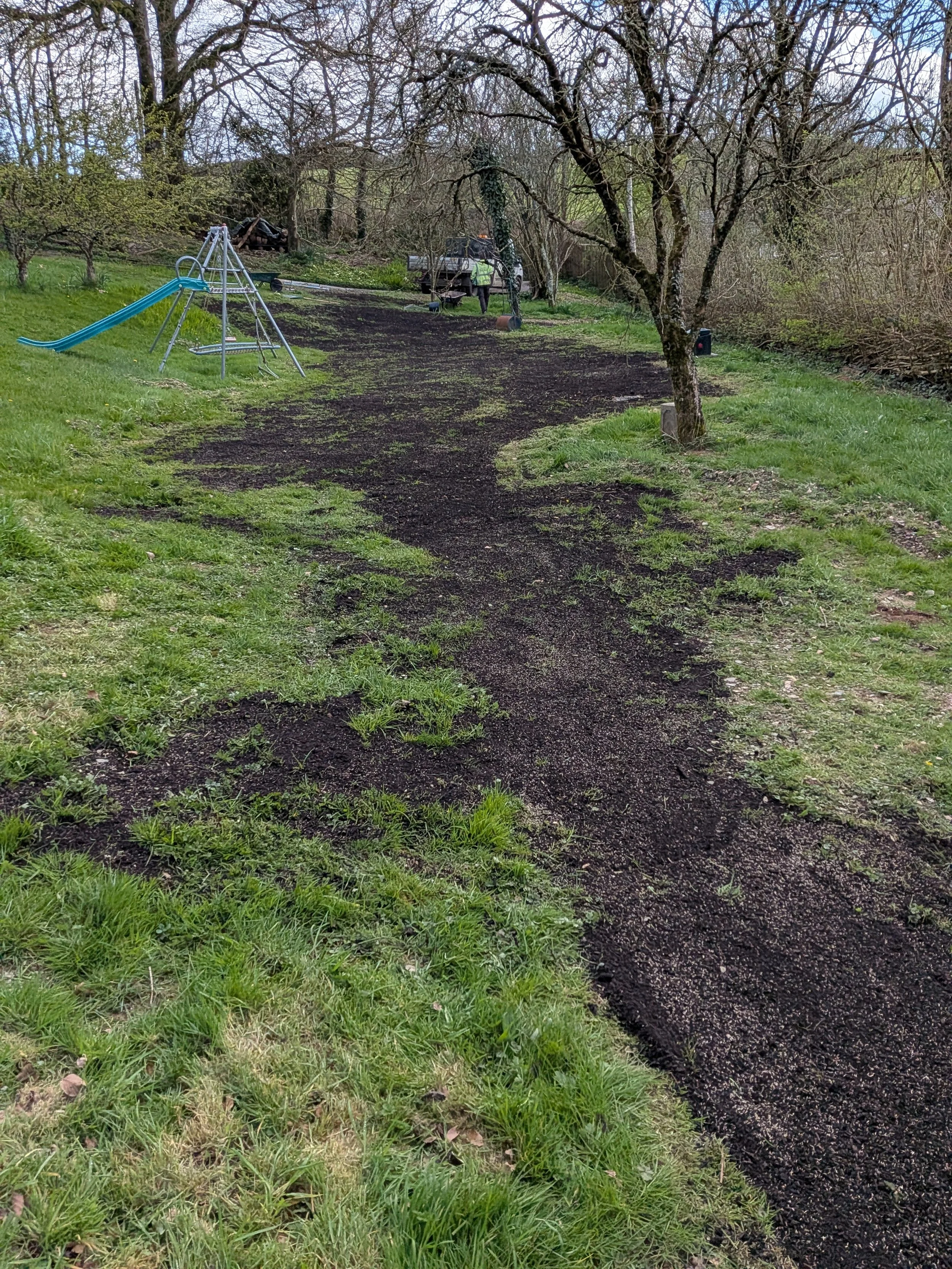
Landscaping work is great for the house, but it can be brutal on your grass. This lawn was left dried out and buried under construction dust—looking more like a dirt track than a garden.
The Secret Sauce: Wildwoods Special Compost
You can't just throw seed on dead dirt and hope for the best. To give this lawn a real fighting chance, we headed over to see our friends at Wildwoods Contractors in Marldon.
I picked up a fresh load of their specialist green waste compost. This stuff is the real deal—processed right there on their farm to PAS 100 standards. It’s basically high-octane fuel for tired soil, packed with the biology needed to bring a "dead" lawn back to life.
Today’s Work
The Workout: Dozens of wheelbarrow trips to get that "black gold" spread across the damaged areas.
The Prep: Raked it down deep to create a level, moisture-locking seedbed.
The Finish: Applied high-quality seed today! The compost acts like a protective blanket, keeping the seeds damp and fed so they can sprout strong.
Why I Use Local Marldon Compost
By using a recycled product from just down the road, we’re keeping things sustainable and ensuring the soil gets exactly what it needs for our South Devon climate. It holds water better than topsoil and gives those new roots a massive head start.
Is your lawn suffering from "post-landscaping blues"? Don’t just wait for the rain—let’s get some proper nutrients back into the ground!
How to Recover Your Lawn
A beautiful lawn is a source of pride for many homeowners. But over time, lawns can become damaged and unsightly. Whether your lawn has been damaged by drought, disease, or neglect, there are steps you can take to bring it back to life.
Assess the Damage
The first step in lawn recovery is to assess the damage. Determine the cause of the problem and how widespread it is. This will help you determine the best course of action.
Aerate the Soil
Aerating the soil is essential for healthy lawn growth. It loosens compacted soil, allowing air, water, and nutrients to reach the grass roots. You can aerate your lawn with a machine or by using a garden fork.
Fertilize the Lawn
Fertilizing your lawn provides the nutrients it needs to recover and thrive. Choose a fertilizer that is appropriate for your type of grass and the time of year.
Overseed the Lawn
Overseeding is the process of planting new grass seed over an existing lawn. This can help fill in bare spots and thicken the grass.
Water the Lawn
Watering your lawn is essential for healthy growth. Water deeply and regularly, especially during dry periods.
Mow the Lawn
Mowing your lawn at the proper height is important for its health. Avoid mowing too short, as this can stress the grass.
Weed Control
Weeds can compete with grass for nutrients and water. Take steps to control weeds in your lawn.
Pest Control
Pests can also damage your lawn. Identify any pests that are present and take steps to control them.
Be Patient
Recovering a lawn takes time and patience. Don't get discouraged if you don't see results immediately. With proper care, your lawn will eventually recover and become healthy and beautiful again.
Additional Tips
Remove thatch from your lawn. Thatch is a layer of dead organic matter that can build up on top of the soil. It can prevent air, water, and nutrients from reaching the grass roots.
Topdress your lawn with compost. Topdressing is the process of adding a thin layer of compost to your lawn. This can help improve the soil and provide nutrients to the grass.
Use a soil test to determine the pH of your soil. The pH of your soil affects how well your lawn can absorb nutrients. If the pH is not in the ideal range, you can amend the soil to correct it.
By following these tips, you can help your lawn recover from damage and become healthy and beautiful again.
Compost: The Gardener's Gold
Compost is like magic for your garden. It's a natural fertilizer and soil enhancer that breathes life into your plants and creates a thriving ecosystem. At Totnes Gardening, I understand the power of compost and its importance in building healthy, sustainable gardens.
Why Compost Matters
Compost is more than just decayed organic matter; it's a powerhouse of benefits for your garden:
Nutrient-Rich: Compost provides essential nutrients that fuel plant growth, leading to healthier, more vibrant flowers, fruits, and vegetables.
Soil Structure Superhero: Compost improves soil structure, making it looser and more aerated. This allows for better water retention and drainage, preventing waterlogging and promoting root growth.
Waste Reduction Warrior: Composting is an eco-friendly way to reduce household and garden waste, minimizing your environmental impact.
Earthworm Encourager: Compost attracts earthworms and other beneficial organisms that help break down organic matter and improve soil health.
Compost Services Offered
Compost Collection: I can collect your garden waste, such as leaves, grass clippings, and prunings, and transform it into nutrient-rich compost.
Compost Delivery: Need compost for your garden? I can deliver high-quality compost directly to your doorstep.
Compost Advice: Unsure about how to use compost effectively? I'm happy to provide expert advice on composting techniques and applications.
Creating Your Own Compost
Want to try composting at home? Here's a quick guide:
Gather Organic Materials: Collect kitchen scraps (fruit and vegetable peels, coffee grounds), garden waste (leaves, grass clippings), and other plant-based materials.
Choose a Compost Bin: Select a bin that suits your needs and space. There are various options available, from simple DIY bins to more sophisticated composting systems.
Layer Your Materials: Alternate between "green" materials (nitrogen-rich, like grass clippings) and "brown" materials (carbon-rich, like dried leaves) to create a balanced compost mix.
Turn Regularly: Aerate the compost by turning it occasionally to speed up the decomposition process.
Be Patient: Composting takes time! It can take several months for the materials to break down into rich, usable compost.
Compost: A Cornerstone of Sustainable Gardening
Compost is a key ingredient in creating a sustainable and thriving garden. It reduces waste, improves soil health, and nourishes your plants, all while benefiting the environment.
Contact me today to discuss your composting needs and let's work together to create a healthy and vibrant garden.
